
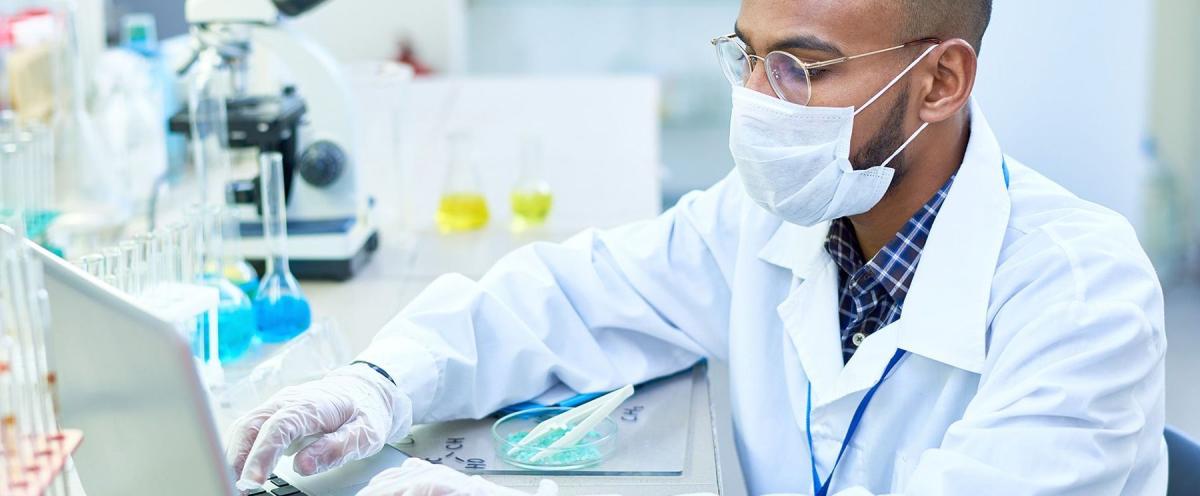
COVID-19 Laboratory Challenges and Learnings—One Year Later
This article is a follow up with Thad Gurley of the Duke Human Vaccine Institute (DHVI) Accessioning Unit, and Stuart Magoon of the City of Tacoma Environmental Services Laboratory (ESL) to gain their perspective on leading labs through a year of the pandemic.

Vaccines that can protect against many coronaviruses could prevent another pandemic
In 2017, three leading vaccine researchers submitted a grant application with an ambitious goal. At the time, no one had proved a vaccine could stop even a single beta coronavirus—the notorious viral group then known to include the lethal agents of severe acute respiratory syndrome (SARS) and Middle East respiratory syndrome (MERS), as well as several causes of the common cold and many bat viruses. But these researchers wanted to develop a vaccine against them all.

School of Medicine faculty, staff receive prestigious Duke Presidential Awards
The School of Medicine faculty and staff were among the recipients of Duke University’s prestigious 2020 Presidential Awards, which recognizes individuals and teams from the University and Health System who best demonstrate the values that define and shape Duke as an institution: respect, inclusion, excellence, trust and discovery.

A next-generation coronavirus vaccine is in the works, but initial funding was denied
Drew Weissman realized a year ago that even if the COVID-19 vaccines then in progress were eventually approved, it might not be enough. The world might need a next-generation vaccine to rid itself of this pandemic.

How soon can recovering and current COVID-19 patients be vaccinated?
As millions of people recover from COVID-19, questions surrounding the vaccine, such as how soon a person can be vaccinated after recovering from COVID-19, are being asked. Moreover, people want to know if it’s OK to receive a vaccine if they currently have COVID-19. We talked to DHVI Investigator, Dr. Chip Walter for answers.

VIDEO: What is considered good vaccine efficacy?
DHVI Investigator and director of the Duke CIVICs Vaccine Center (DCVC), Dr. Tony Moody answers questions about effectiveness of the Moderna, Pfizer and Johnson & Johnson vaccines. Dr. Moody is a Professor of Pediatrics at Duke and an experienced clinician in Pediatric Infectious Diseases.

COVID: Uncovered - 1/20/21
A few takeaways from DHVI director, Dr. Bart Haynes' interview with PBS North Carolina on COVID-19 vaccines.

DHVI Faculty Opinion: Why are some healthcare workers denying COVID-19 vaccination?
The Pfizer and Moderna vaccines have proven to be highly effective in preventing severe cases of COVID-19 with over 94% protection against SAR-CoV-2. Although expedited, the vaccines were carefully evaluated in clinical trials and were approved by the Emergency Use Authorization (EUA) by the Federal Drug Administration (FDA) in December 2020.

A New Vaccine to Battle Covid-19
The United States and many parts of the world have now lost control of the Covid-19 pandemic owing to the respiratory spread of SARS-CoV-2 and to inconsistent adherence to effective public health measures, including wearing masks and maintaining social distancing. Persons infected with SARS-CoV-2 are frequently asymptomatic, yet they have high respiratory viral loads, and they are major purveyors of viral spread.

Barton Haynes Answers the Essential Questions About the COVID Vaccine
Dr. Barton Haynes talked about the many continuing questions researchers still have about the COVID-19 virus and why Americans should have confidence in the safety and durability of the vaccine.